• Skip to main content
  • Skip to footer

Live Limitless

Adventure, Business, Travel

  • About Matt
  • Start Here
  • Travel Hacking
  • Blog
  • The List
  • Contact

Travel

A Guide to Experiencing Osaka on the Cheap

by Matt Leave a Comment

View image | gettyimages.com

Although Osaka is one of the biggest cities in Japan, there are actually quite a few things to do and places to see that cost very little or nothing at all. This guide will help you find some of the best free or low-cost things to do on your Osaka trip.

Drink Free Beer

While Japan usually conjures up images of delicious sushi, it’s also a popular country for great-tasting beer. One of those famous beers is Asahi and you can visit the Asahi Beer Suita factory just outside the main city area. You’ll see how it’s made, plus you get to drink unlimited beer for 20 minutes for free!

Relax at Osaka Castle Park

Located right in the center of Osaka, this park is a beautiful, tranquil oasis that offers spectacular views of Osaka Castle, which is surrounded by moats and towering stone walls. If you happen to be there in late March or early April, this is also a great place to witness the magnificent cherry blossoms bloom from the Sakura trees. Bring a snack and escape the hustle of Osaka while enjoying a truly local experience.

Visit Sumiyoshi Shrine

One can’t truly say they’ve been to Japan without taking some time to visit one of the many shrines, and Osaka has one of the oldest Shinto Shrines in the country – Sumiyoshi Taisha. Dating back to 211AD, this spectacular shrine is rich in history and features amazing architecture, beautiful gardens and bridges, an impressive stone Tori gate, and an overall peaceful experience for those seeking a break from the city life.

An Electronic Paradise

If you love electronics, you probably love Panasonic. Luckily for you, Osaka is home to the Panasonic Center, which has showrooms of all their latest gadgets, new technologies, and a really cool hands-on exhibition that gives you tips and tricks for making your life better. If technology is your fancy, this is worth a stop.

Explore Monoh Park

Located outside of Osaka’s major urban sprawl, Monoh Park provides the scenery of a forested valley with numerous hiking trails, a waterfall, and scattered temples. This is another great park for having a picnic and escaping the stress of the city.

Get Pampered at Spa World

Although this attraction isn’t free, Spa World is quite cheap considering the pampering you can get for an entire day. For just $22 USD, you can literally spend the entire day maneuvering between various onsens from around the world, including Ancient Rome, Finland, Persia, and traditional Japanese outdoor baths.

Find a Cheap Place to Sleep

Finding cheap hotels in Osaka is easier than most cities in Japan, and the city actually makes a great base for exploring Kyoto, Nara, and many hiking trails in the neighboring mountain ranges. If you’re comfortable getting slightly off the tourist trail, the area of Shin-Imamiya has the cheapest hotels, while budget hostels can be found in popular areas for as low as $30 for solo travelers. Dotonbori Hotel is a popular choice for those wanting added comfort, with rates starting at just $75 per night.

Interested in how I travelled to Japan for free? Click here to read about how I started saying yes and changed my life.

**

this post was written as part of the hipmunk #citylove project. As a paid writer for hipmunk city guides, I’ve written about many world-class cities including Hong Kong and Osaka. I’ve also written about the best things to do in Vancouver.
Stop Making Excuses in the New Year

by Matt 2 Comments

If there’s one thing that really gets to me, it’s hearing people make excuses for everything in their life. They complain about this and that and how other people are simply lucky. Sometimes I give them possible solutions and they brush them of with yet another excuse. It’s exhausting.

I’ve fallen into this category more than a couple of times in my own life and I can certainly tell you that it gets you nowhere. If anything, it just makes things worse.

If you’re unhappy with your situation but keep doing the same thing, you’re going to be exactly where you are one year from now and ten years from now and twenty years from now. The definition of insanity is doing the same thing over and over and expecting a different outcome.

Don’t be insane!

You can’t complain that you don’t have enough money to travel the world or that you don’t have any time to learn new things or that you don’t have enough income and then turn around and watch the next episode of American Idol. You can’t sleep in late every day, stare at your Facebook feed for hours and sit on the couch if you expect to make changes in your life.

It doesn’t work like that.

We all have enough time to learn something new and try new things. If your time isn’t prioritized however, it will go to waste.

I have friends who make more than $100K per year but have no savings…

I know some people who say year after year that they want to travel or pay off debt but literally don’t make one step in either direction…

Some complain about not being able to find a job yet they’ve only applied for five or six…

Others want to start a side project or learn a new skill or start a business but spend all their free time partying or watching movies…

Every one of them has an excuse.

I don’t have the time. No one will hire me. I can’t do that. I don’t have enough money, etc, etc, etc.

It actually irritates me to see people throw away possibilities in life. I find it quite sad because it’s all bullshit.

Everything is a choice.

Stop Making Excuses in the New Year

If you don’t have enough money, chances are that you’re not spending it right. You need to re-prioritize where the money is going and make a change. Your accommodation, eating habits, drinking habits and shopping habits are all choices you make. No one is forcing you to do anything.

If no one is hiring you, you’re doing something wrong. Maybe your resume sucks. Maybe it has spelling mistakes. Maybe you’re not applying for enough positions or maybe you’re applying for the wrong jobs. How about moving to a new city? Maybe you need to start for free or do something creative to get attention.

If you want to travel but never do, you haven’t made it a priority. It’s extremely rare for someone in a developed country to not be able to afford traveling somewhere exotic for a long period of time. What’s common however is that people either tell themselves lies such as traveling is too expensive or they are simply spending their money on other things instead. Others expect too much and have conned themselves into thinking they need 5-star hotels to change their life abroad. Ugh.

The point is. You have chosen where you are. Yes, we all have different circumstances and some of us have it a little harder but for the most part, you are where you are because you’ve put yourself there. Unless you’re living in North Korea where you’re literally imprisoned, you are free to make a different choice. It might takes months or years but if you want it bad enough, YOU CAN make it happen.

Unfortunately (or fortunately in my opinion), it requires effort. Government programs don’t pay citizens to travel and do what they want. You can’t lose weight by eating junk food. Great jobs are not bought at a vending machine and are rarely found in a job database.

Make a choice and stop making excuses. If you’re too lazy to make a change, you should still stop making excuses and just accept where you are and where you’re going. Contentment is the key to happiness after all.

If you do want to make a change and are ready for some small sacrifices, get started right away. Though you should never wait for the New Year, it’s here anyways! All you need is you and the desire to be somewhere different in life.

How to Stop Making Excuses in Life

Want to travel?

Make it a priority. Stop doing other things that cost you a lot of money. Stop buying new clothes. Stop buying alcohol at bars. Stop eating out at restaurants. Move to a cheaper apartment or a cheaper house. Figure out why you actually want to travel and know that you don’t have to be rich to travel the world. Create a plan and get started. You can also sign up for a free copy of the Limitless Travel eBook or Canadian Free Flyers travel hacking program.

Want to lose weight?

Stop eating junk food. Eat less carbs. Stop drinking soda. Stop drinking alcohol. Commit to a 12-week program and get a gym membership. Work out every morning. Start sweating. Eat clean and drink lots of water. Take a before picture and cry yourself with happiness when you take your after-picture 12-weeks later. It really is this simple. The hardest part is perseverance.

Want to learn something new?

Maybe you want to learn how to create a business on the side or learn how to salsa dance or learn how to code computer programs. Did you know most of these things can be learned online for little or no money? Stop watching TV, take shorter showers and stop using social media so you can spend that time studying what you wish to learn. Make it a commitment. Do it everyday. Get out of the house and meet new people who want to learn with you. Try meetup.com. That’s just one option.

You may know right away that this is you. Maybe you know others who should read this. Awesome! Share this with them. It’s free. Some of you will probably shake your heads in agreement and some of you will shake your heads in disagreement and start surfing the Facebook newsfeed for pictures of celebrities and their pets.

What I hope is that at least ONE PERSON will read this and be inspired to change themselves and move in the direction they wish to go in. You don’t need to know the destination – you just need to begin moving forward. The path will change as you move forward but at least you won’t be lost in the forest of life.

What do you want to change? Where do you want to go?

Share below and I’ll get back to each and every one of you.

***

For those wondering my plans for change in 2015, a lot of it is extensions of what I’ve already been doing. I plan on visiting about 10 countries. I plan on doing another fitness program when I’m back in Canada for the summer. I plan on being more happy, grateful and content. Most of all, I plan to focus more on business, even though it’s going to be VERY HARD with all the adventures planned.

I plan to LIVE LIMITLESS in 2015 because I’ve learned that 2016 is not guaranteed.

Adventures in Huasteca | A Side of Mexico Almost No One Ever Sees

by Matt 2 Comments

I looked down at my watch. Wait, that’s not true. I looked down at my phone. The time was 7 am. We had just reached the bus terminal of Ciudad Valles after a 9-hour evening bus from Mexico City. I had slept maybe 2-hours but was excited to get back into nature and see some awesome friends we hadn’t seen since our university exchange in Malaysia back in 2012. After weeks of traffic and concrete in the world’s second-most-populous city, it was now time for beautiful waterfalls, turquoise waters, and subtropical rainforest hikes.

Ricky and Andrea, two friends of ours that happen to be bamboo architects, and our friends we had come to visit picked us up to go back to their house for breakfast. They had already booked our first adventure, which was just-so-happened river kayaking at 10 am. We ate breakfast, I grabbed an energy drink and we made way to the first of many beautiful tranquil rivers for the following week.

Tumul WaterFall

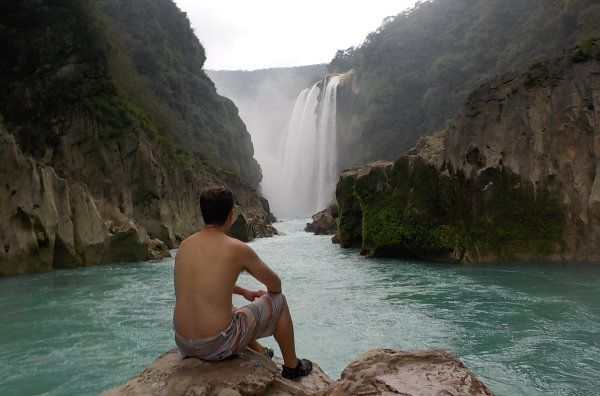
We joined up with some American kayakers who have a business in Mexico during the winter months. They gave us a rundown on how to operate the kayak and told us we’d be going down class-2 rapids. After paddling around one of the biggest waterfalls in the area, we got started. When the first rapid came, we fell off in an embarrassing fashion. Karla got massive scrapes all the way from her bum to the middle of her leg and I got lucky with just a bruise. Nothing big, though her cuts looked horrible. After that, we got the hang of it and only fell out one more time, thankfully in deeper water. We had only kayaked once before in calm waters so this was a completely new experience and a fun one at that.

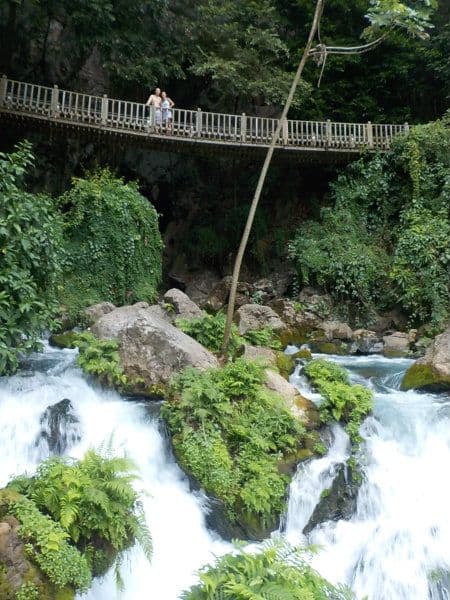
It was incredibly scenic. The water was a light blue. The sky was blue. The jungle ferns draped over the edges and had an almost “Indiana Jones” feel to it. Mini waterfall after mini waterfall, we made our way down the river for a couple of hours, finally disembarking near someone’s farmland, where some other locals had been paid to drop off our vehicles for us.

Success.

tumul waterfall huasteca

After a delicious but greasy lunch of Mexican gorditas, it was time for another waterfall adventure.

This time we were going to be jumping off of nine different waterfalls, starting from a mere 3-meter drop to the biggest drop of the day at 9 meters. Some of them we could slide down like waterslides and after the last one, we had a big surprise waiting for us. We were able to swim behind the waterfall. Crouching down in a cool, dark cave while looking out from behind a powerful waterfall pour down in front of us was as magical an experience as it gets. I wanted to stay for hours and just be in the moment. This was another first for me and definitely something I’d love to do again. After a good five or ten minutes, we crawled to the left and eventually leaped through the waterfall and back into the cold waters.

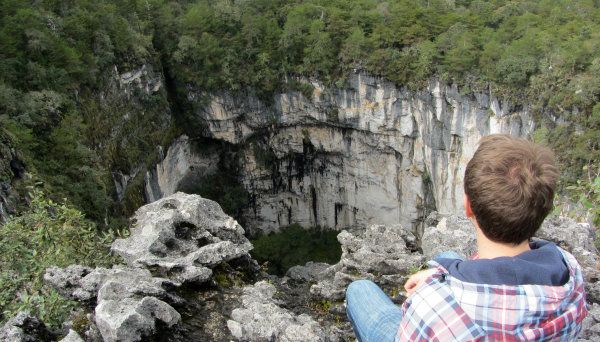
Over the next week in Huasteca, we never stopped. It was adventure after adventure. We went paddle-boarding for the first time in small ponds and also upriver to see a massive waterfall towering above us. We took the kayaks again to a different river and also paddled upstream to Tamul waterfall, the biggest waterfall in the area. We then said bye to water activities and went hiking through a magical subtropical rainforest to reach a staggering 200-meter sinkhole in the middle of the mountains. This area is famous for sinkholes with the most notable one being the Cave of Swallows, which was featured in BBC’s Planet Earth and many National Geographic articles. We went to the one that almost no one ever sees, which added to the experience of it all.

Huasteca Sinkhole

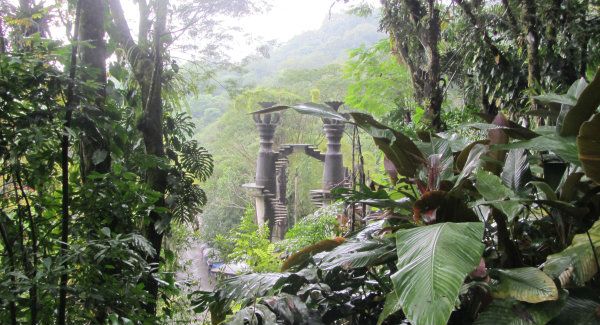
After spending a night in some beautiful cabins in a small tranquil mountain village, we embarked on another new adventure – mountain climbing. The goal was to see an incredible view from the top but the rain caused too much mist for any view to be seen. Though this was disappointing, it was really cool to strap on a harness with real mountain climbers and make our way up a steep mountain. I was told that I was a natural so who knows – maybe I’ve found a new activity to fall in love with. We then continued on to a surreal castle built by Edward James near the town of Xilitla. This magical place is built into a natural waterfall and was meant to resemble “the Garden of Eden”. All Rocky and I could talk about was designing a liveable town just like this. Paradise.

I love trips like this.

While it wasn’t a new country (I’ve spent about six months in Mexico during the last five years), it was a new area and a place that almost no tourists ever see. The only tourists that make it to this area of Mexico are hardcore adventurers like the kayakers we met from the States. Most opt for major cities or beach resorts.

They are missing out and this could be great for visitors from couples to a great family holiday in Mexico.

This place was like walking into a National Geographic documentary. All the locals are super friendly and not-yet-damaged from mass tourism like those from Cancun and Riviera Maya. It actually reminded me of my time in Asia, driving through tiny villages and farmland and witnessing little villages with happy families. There are so many beautiful cities in Mexico, some of which are vastly unexplored.

Edward James Castle xilitla

After about five months of work and city life, this adventure was just what I needed. Adventure, thrills, good people and the odd bottle of Victoria beer. I tried some new adventure sports and grew as a person, which is just what travel is about, no?

When was the last time you tried something new or had your heart rate increase from excitement? Let me know in the comments – I’d love to hear about it.

My friend Ricky is building incredible bamboo buildings in the Huasteca region and we’re thinking of organizing an adventurous and unique tour in the next year or two. Would you be interested? Leave a comment if you are and you’ll be first in line when they happen.

PS: Don’t forget. I’m going to be releasing a book in 2015 called Limitless Travel. It’s going to be the ultimo travel resource book teaching you how to find the cheapest flights, how to become a travel hacker, all the different modes of transportation, different types of accommodation, best travel gear, and much more. It’ll be free for the first 5 days once released so make sure you sign up here and be the first to know about its release.

LL 015: Travelling Around the World with a Family | An Interview with Greg Denning

by Matt 2 Comments

In the 15th episode of the Live Limitless podcast I chat with Greg Denning of DiscoverShareInspire.com and GregDenning.com.

Greg and his wife are traveling around the world with six kids! Need I say more? They have been traveling for more than 2700 days and are currently in the middle of a long road trip from Alaska to Argentina. What inspires me about Greg is not only the fact that he’s making full-time travel work with a family of eight but also because he remains super enthusiastic and his outlook on the world is very positive.

This episode focuses entirely on travel. We talk about:

  • How Greg and his family choose where to go
  • How the prepare for things like visas, vaccinations, etc.
  • How they prepare for the different cultures
  • Tips for those afraid to make such a bold move
  • Tips for staying safe
  • How they find accommodation and so forth
  • And how to bring the travel mindset home with you

I really hope you enjoy this episode. Please leave any comments for Greg below and leave a review in iTunes.

Are you interested in traveling the world, whether it be for a few weeks, a few months or a few years? Limitless Travel is a new eBook that will be coming out soon that will teach you everything you need to know from how to book the cheapest flights, find the cheapest or most unique accommodation, how to find what to do in any particular place, the best travel gear to have as well as the top travel apps, websites and so much more. Sign up here to be the first to know when its released and to get a copy of it for FREE.

https://s3-us-west-2.amazonaws.com/livelimitlesspodcast/LL_015_-_An_Interview_with_Greg_Denning.mp3

Podcast: Play in new window | Download

Subscribe: Apple Podcasts | Email | RSS

You can also find the podcast by clicking here.

If you’re running short on time;

(4:50): Process for choosing where to go.

(11:10): Preparation for the un-fun part like vaccinations.

(15:45): We talk visas.

(16:40): Preparing for the culture.

(19:05): Deciding to travel long-term.

(21:15): Tips for those afraid to leave due to careers, etc.

(24:00): How Greg finds flights

(27:50): What they do for accommodation.

(32:00): Tips for staying safe.

(34:00): Bringing the travel mindset home with you

***

Hope you enjoyed this interview with Greg Denning.

Please leave a review at iTunes and/or share with your friends. If you have a question for Greg, leave a message in the comments and I’ll get him to answer.

Make sure to subscribe to be the first to know about the Limitless Travel eBook and get a copy for free!

The Amazing Monkey-Man | An Interview with a True Superhero

by Matt 4 Comments

WARNING: This article might inspire you to head to Bolivia and volunteer at La Senda Verde animal refuge! This interview, which was originally done via audio, is a whopping 5500 words. It will take you a good 10-20 minutes to read but I promise you – It’s worthy of your time.

Back in June of 2014, My wife and I volunteered at a place called La Senda Verde. It had been a dream of ours to volunteer with animals and despite many things in our way (limitless adventures, road blocks, protests, etc) we never gave up on that dream and sure enough, in the last two weeks of our South American journey, we ended up at a beautiful animal refuge deep in the jungles of Bolivia.

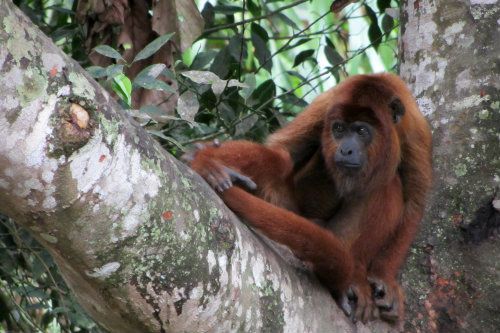
The original plan was to volunteer at an animal refuge in a different part of Bolivia but after hearing some questionable stories about that place and all the wonderful things about this place, we decided to go with La Senda Verde. Our time spent at LSV was one of the most magical experiences in both of our lives. Sure, Karla got bit a couple of times by a cranky Howler monkey but I didn’t – so there. What can I say, I guess monkeys love me.

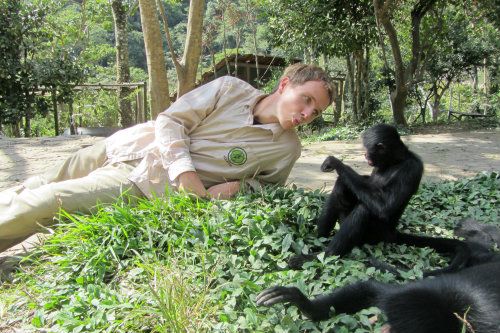
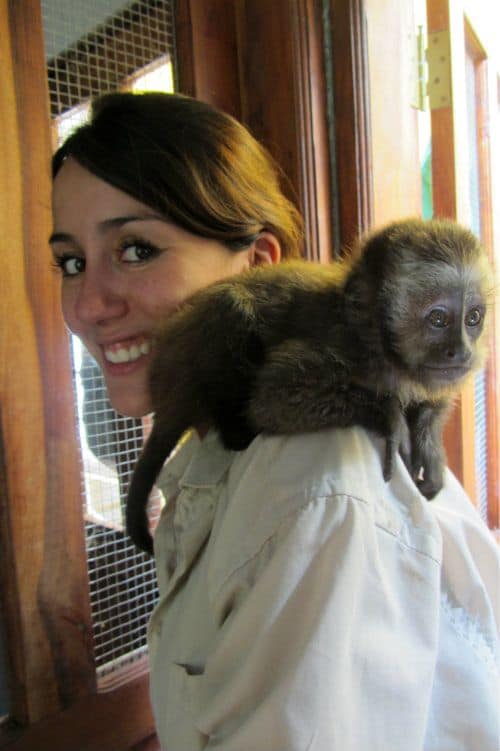
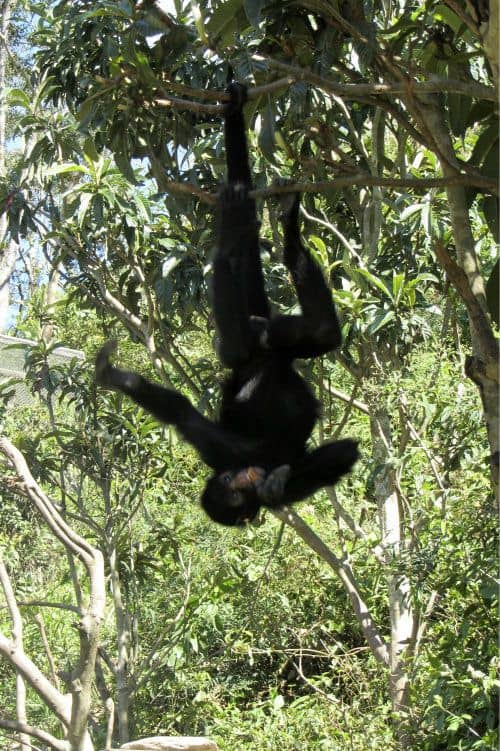
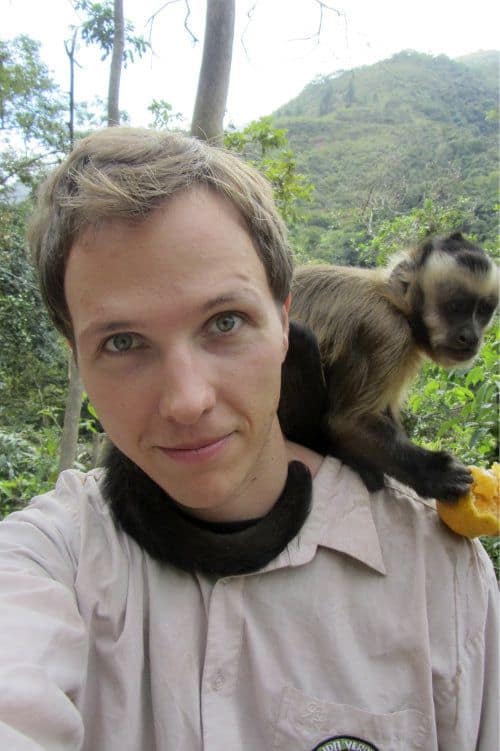
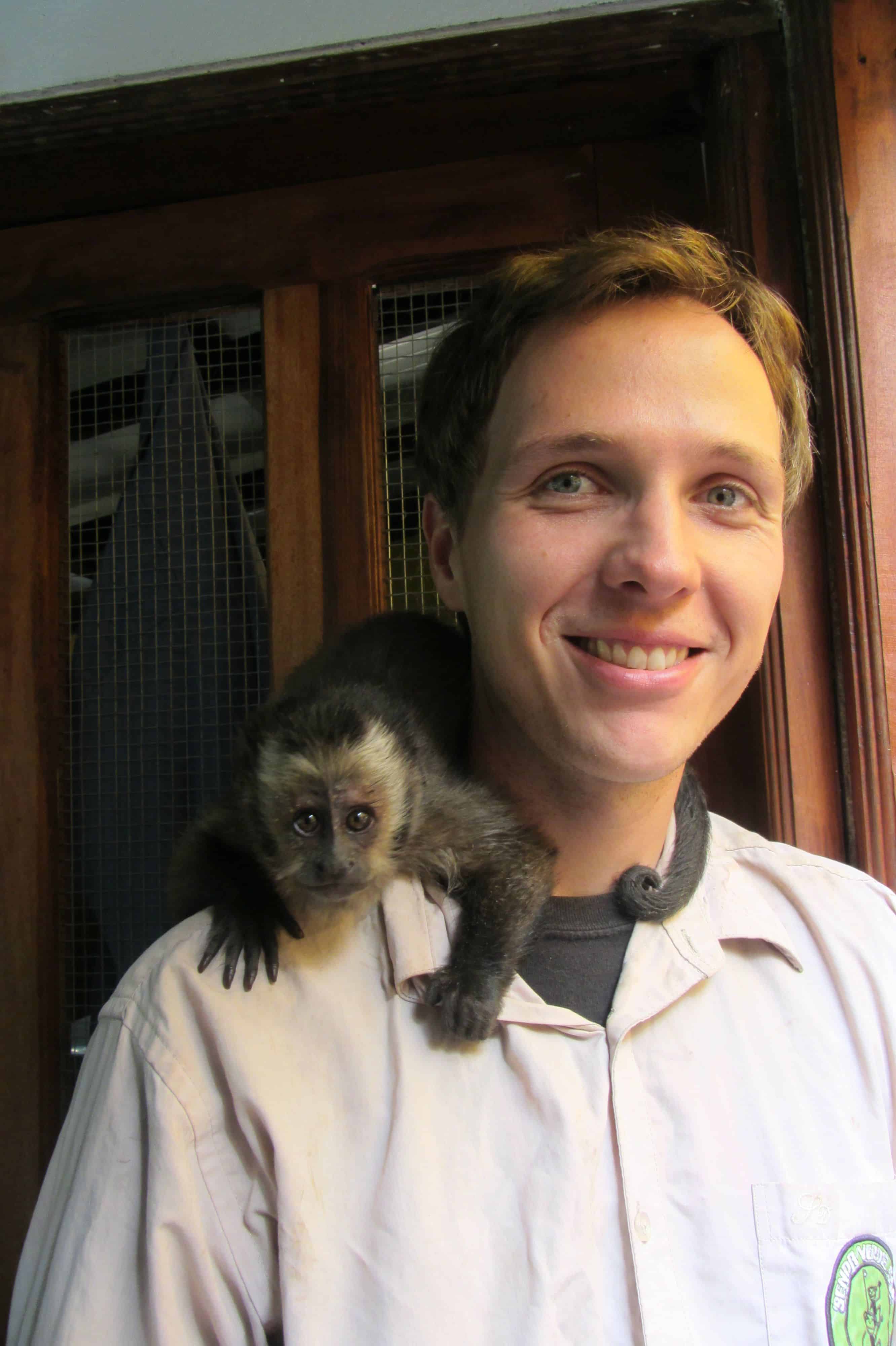
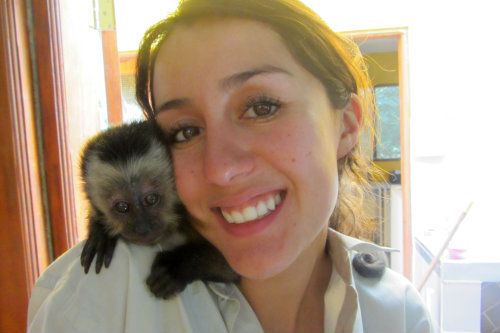
La Senda Verde is filled with animals that were kidnapped from the jungle and sold as pets. There are heaps of parrots, Macau’s, turtles, monkeys, bears and other exotic animals that have all been given a second chance. During my rotation, I made friends with loud obnoxious birds (many of whom greeted me with “hola”), had a little turtle try to ram me with his shell (how cute) and fed oatmeal to Capuchin monkeys while they tried to go down my shirt.

One of the most amazing experiences was meeting Marcelo and Vicky, the founders of La Senda Verde. Marcelo is known as the Monkey-Man and has become the “alpha male” to more than one hundred Capuchin, Howler and Spider Monkeys. Since accidentally starting an animal refuge ten years ago, Marcelo has raised most of these monkeys himself and has become the king of the jungle for many of these amazing creatures roaming free around his property.

It’s hard to find Marcelo without monkeys following him around but on our second last day, we managed to do just that, which allowed us to record a 1.5 hour interview with this incredible man. The audio recording wasn’t very good but I spent hours transcribing it into the interview you see below. I hope you enjoy it and find inspiration in how this man gave up his normal life to help give life to these wonderful creatures.

For information on how to volunteer, see what they are up to or to send much needed donations, go to the end of this interview.

Welcome Marcelo (Aka: Monkey-Man) | A True Superhero

How did La Senda Verde start and how did you become the monkey man?

La Senda Verde is a 10-year-old eco project. When we came to this place, we didn’t even plan on having a sanctuary or an orphanage. It was meant to be a tourist destination mainly for the adventure tourists that bike down the old road, also known as the world’s most dangerous road, which equals roughly 30,000 tourists each year. Our main idea was to provide services such as showers, shelter and some food. That was it.

I was still working on another project but my wife, Vicki, quit her job in La Paz and was going to run this business-oriented eco project. After starting the business, which was about two years after coming up with the original idea, without any planning or thinking, something very beautiful happened – I rescued a Capuchin monkey, which just so happens to be Ciruelo, the alpha-male Capuchin monkey at La Senda Verde today. It’s been roughly nine years now since that happened.

Volunteer with animals Bolivia

Then, two or three months after the rescue of Ciruelo, Vicki and I rescued another monkey. Both of these cases involved monkeys that were being kidnapped from the jungle and taken out to the main city of La Paz to be sold as pets. In the case of Ciruelo, It was actually some children from a village nearby who came and told me about a baby monkey that had arrived in town. At this time, there was no new road so all the trucks and cars had to use the old road, which went all the way to La Paz. However, all the trucks and big buses used to stop at the village. So anyway, one Saturday, some children came and said, “Marcelo, there’s a baby monkey in town!” Out of curiosity, I went with them just to see the monkey and what was going on.

The children pointed out the truck driver who had the monkey. He was eating at a local restaurant and I went up and asked if I could sit with him. He was by himself and was probably wondering what I wanted. I proceeded to tell him that someone had told me that he was taking a monkey to La Paz . He said, “Yes, do you want to buy it?” and I said, “No, I just want to see it because I live nearby and I am curious.” After about 10 minutes, I finally convinced him to show me the monkey. Of course, he was hoping I would buy it anyway. When we got to the truck, he pulled out a small shoebox and inside was a baby Capuchin. When I saw the look on his face and in his eyes, I knew that monkey had to be with me.

It was just so sad and depressing. The boxes were very dirty and it was obvious how frightened he was, so I told the driver, “Please! You must give me this monkey.” and obviously he told me, “If you buy it and if you pay for it, it’s yours.” But I didn’t have any money on me because I had literally just ran to this place to see the monkey and I also knew that it was against the law to buy illegal animals because it motivates people to do the same thing.

And so he told me “No, I will take it to La Paz and I will sell the monkey for 200 Bolivianos ($30 USD).” But I didn’t let him go that easy. Instead, I sat with him for almost one hour and continued on with my ply for the monkey. Eventually, I think he was getting upset having me stare at him while he was eating and begging him endlessly for this little creature. But finally, it worked and he said, “Okay crazy guy – pay for my coca cola and my food (which was only six Bolivianos), take the monkey and leave me alone.” That little monkey became Ciruelo and was the first animal we rescued.

That moment helped me realize that I could probably convince other people and rescue more animals. As I mentioned before, just two or three months later, another opportunity came. In the town of Coroico (not far from La Senda Verde), we rescued a female monkey. Then, not too long after, a friend of mine called me from La Paz and told me that he had two parrots and one macaw – that they were in bad shape – and was wondering if I could take care of them because he was going travelling for a couple of months. Those birds are still here nine years later! Haha. He actually did come back but one of them had learned how to fly and so he just let it be.

And then, it’s amazing how things happen. I remember this priest from Coroico , he came early one day in the morning and he said, “Marcelo, sorry to bother you this early, but I have a big tortoise and we do not know what to do with it.” So yeah, in just one year we had five or six wild animals and here I was taking care of them. I had no idea that I would end up having an animal sanctuary – It just happened.

La Senda Verde Bolivia
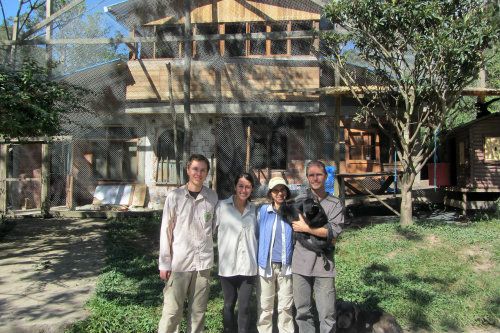
Marcelo, Vicky, My wife Karla and Myself + One Spider Monkey

Another nice memory I have is when after rescuing the two monkeys in the beginning, a friend of mine who was working on environmental issues at the time told me, “Marcelo, you have a unique skill to rescue animals and you have the space for them. In a couple of years, your place is going to be full of animals.” And yeah, that’s what happened.

Although I had been to the jungle before, I decided to go back as a tourist and see what was going on in terms of wilderness and illegal trafficking. Even though Vicki and I were both born in Bolivia, we didn’t realize how bad the situation was. After doing some research in the jungle, I went back to La Paz and had some interviews with government officials so we could all start understanding this problem. I’ve always loved animals but I am not an expert in this matter. We then got in touch with some biologists and after talking it over with Vicki, we decided to redesign our lives and redesign the whole mission and vision of La Senda Verde. We decided to make this place a sanctuary, which obviously was a very difficult decision to make because we were planning to have this as an income operation and I was still working on another project/job. Suddenly I had to quit my job because we started to receive more animals.

Those were the starting days of La Senda Verde when there was nothing here – and yeah – so with the road going to La Paz, we started seeing many trucks going by taking lots of animals and plants and everything from the jungle, which is a 20-hour drive from here. Places like Rurrenbaque, Bando and all the northern region of Bolivia. This is the main road that connects all the northern region of Bolivia and all the way to Chile so there is a lot of products that are taken out of the region. We began to notice this more often and that’s when we realized we had to do something and why we decided to start La Senda Verde. At that time, we were working with four biking companies and the business was really booming and we figured we could work with 5 or 6 of the big biking companies, which would have made us retired by now…but we realized we had another mission in life.

How do you feel now about everything you’ve accomplished?

Very good. No complaints at all. It was a big turn in life and it made a big difference. I ended up going to La Paz to speak with these four biking companies – whom were all friends of mine – and we decided to stay with just one called Gravity. We simply told the other three that we were changing direction and making something else out of the property and that there was no business really going on anymore. They told us we were crazy and probably we are crazy but we decided to stay with just one company in order to have some income. Those were the very first years and looking back at those years, it’s not really a long time. So many things have happened, not only to our lives, but to animals, the people that we’ve known, everything we’ve learned about wilderness, conservation, environment, you know – everything – we’ve seen so many things.

Were you working in an office before?

Yes, I was working as a main coordinator for an ONG – an American company helping communities with coffee and other things. I travelled a lot but mainly worked in an office in nearby Coroico but after two years of starting to rescue animals with La Senda Verde, I had to quit my job.

That’s when the difficult decisions came in during those early years but it was very rewarding.

Baby Capuchin Monkey Bolivia
This baby Capuchin arrived while we were there. Sad but isn’t he cute!

How did you learn to raise a monkey?

I had no clue at first but we relied on some friends, vets, biologists and we read a lot of books. Vicky especially, read so much whenever we got a new animal or had any diet problems.

I didn’t know too much of what I was doing, it was just the feeling – but then I got more confident in how I could communicate with them. I got experience in a different way than a professional would. And I must say that there is no such thing as an expert in wildlife because you keep learning everyday. A monkey’s behavior can change with the moon and they also evolve and develop and you need to understand them in every way.

Did you have any bad or scary experiences in the process of getting to know the monkeys?

Not really. I have always loved animals and I have always understood the animals’ behavior. I’ve found it very easy maybe because I have a good energy. I respect them. I’ve been bitten before but I’ve never been scared. If you’re scared, they feel that. The key is to respect the animals and the fact that they are wild. I think it was important that we started with just one animal and learned and developed along the way.

Now we have 56 Capuchin monkeys and they have learned how to work as a team with hierarchy and leadership and they have developed other natural skills as well. Seeing all those changes have helped us to learn and cooperate in the same way. That’s what happens with all the animals at La Senda Verde. We started with one Macau (a big parrot) and now there are 50. We started with one Spider monkey and now there are 16. We even have two bears that are incredible, though you cannot interact the same way.

volunteer with Monkeys in Bolivia

What are some of the steps involved in raising a monkey?

It is a long process and you need to be very patient, especially with the baby monkeys because each one has a different story. They come from different places and most of them have the trauma of losing their mother. You need to make that connection as soon as possible so they trust you. It is a 24/7 process because baby monkeys see you as a parent and forget about their real parents.

Once they rely on you, they become more self-confident, they eat better, their health gets better and eventually they will become fully independent. For example, Spider monkeys don’t get independent for two years. That is why in the wild female spider monkeys don’t get pregnant again during those two years. In the case of Capuchin monkeys, they have another baby after 8 – 12 months because they don’t take as long to become independent. Female Capuchins will also adopt a baby after the baby has spent time in our quarantine area and they live in groups, which gives the baby a “family” to be with. Spider monkeys will also adopt other babies even though they are more dependent on us. They know when it’s a baby and they will play with the baby and make it part of the group.

What happens with the howler monkeys? Do they adopt?

They are different. In the wild they live in small groups of 8 – 12 with one alpha male and maybe two younger males. The rest are females. They don’t really adopt but they will accept the baby and help him.

Every species is different in they way they communicate and interact. The female Howler monkeys really follow the alpha male. The Spider monkeys on the other hand will split up throughout the day but will gather again at lunchtime.

All the monkeys know when there is a baby but the Howler babies have a very delicate diet, which must be very balanced. Among all monkey species, Howler monkeys have the highest mortality rate. It is very difficult to raise them and many times they die.

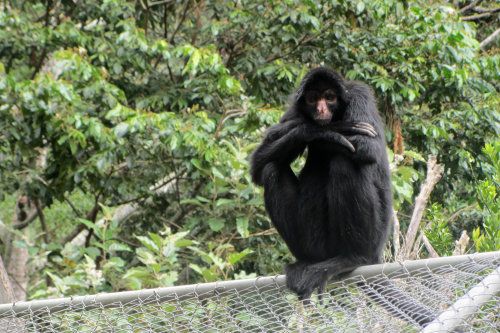
Spider Monkeys La Senda Verde Bolivia

So they don’t get as humanized as the other monkeys?

They can get humanized but the way they become wild is relying on the others monkeys to teach them about their diet, which is so different from the other monkeys. They eat a lot of greens – different leaves from different trees. They have a bad temper compared to other monkeys, which is why they bite more often than the other monkeys. In many zoos around the world, you won’t find Howlers in captivity because they don’t deal well with living in cages unless they were born in captivity. Otherwise they will destroy themselves. Justina (one of the long-time staff members at LSV) and myself raise most of the Howler monkeys, although lately we have needed some help with the Howlers because we received four of them and simply can’t do it ourselves.

How did you teach Canelo to howl? (Note: Canelo is the alpha male Howler at LSV)

(Marcelo Howls, laughingly). Howlers start to howl after about one year and a half or maybe sooner. They copy the sound from other monkeys – mainly the alpha male. After 2.5 years, Canelo still wasn’t howling at all – not even a sound – so I started to listen to howling sounds on the computer so that I could start teaching him in a naturally way. I probably have a horrible accent and Canelo probably does as well.

Since all the monkeys are always following me around, I had to take Canelo to the top of the mountain to teach him how to howl. The first time I did the howl sound myself, Canelo just looked at me like I was a fool. But I kept doing it day after day until one day Canelo started to howl. Howling comes from the neck rather than the chest so the fist time Canelo tried he coughed a lot. Then, after a lot of practice, those muscles strengthened and he stopped coughing, though he still needed to warm up quite a bit. Canelo now has a really strong howl and you can hear it from 5 km away.

Howler Monkey Bolivia Volunteer

Does only the male howl?

The females howl as well but it mostly comes from the male because they have a bigger throat bone for howling.

Is Canelo the only male Howler monkey at LSV?

No, there are three in total. Tumbo is another male and he was raised by volunteers. He then came to me and I introduced him to the other Howler monkeys and he was accepted by the troop. Baby Balu is the other male but is still in the baby monkey mother program being raised by volunteers.

Are you going to have to develop other monkey groups in the future?

As long as they work well together they will stay in one single group, but if the group gets bigger and reaches like 20 – 25 Howler monkeys, then they will probably split into two groups on their own.

This is one of the issues with La Senda Verde because we continue to receive more animals all the time. We are trying to work with other animal refuges in order to transfer or trade some animals to meet the needs of the animals wellbeing. We are thinking ahead so we that don’t have a crisis.

There was actually a moment when Canelo was crawling on my lap and beginning to howl but I noticed everyone around me get nervous and back away, which made me nervous as well. I ended up standing up and leaving him alone. Has this happened before?

When you let Canelo howl on your legs, it is a very powerful experience. You just need to stay calm. He goes on your shoulder because he likes to feel higher and because that is how he learned.

Damn. Sounds like I missed out on a great experience. How was the experience of raising your first monkey?

It was an experience for everyone. Justina and Tomas (two long-time workers at La Senda Verde) were already working with me so Ciruelo was raised by everyone. He was a very spoiled monkey but you could tell that he was different, which is why he became an alpha male. Ever since he was little he would try to control other animals like the dogs and even some humans and when we mentioned this to a biologist he told us that he would become an alpha male in the future.

Some volunteers are scared of Ciruelo because he is big and is in a large cage but he is actually a good monkey and he doesn’t bite unless another monkey challenges him. He is also a very good leader and is very smart and strategic to be able to control the group. A monkey who bites often won’t be an alpha because the rest of the monkeys will be scared of him instead of respecting him. That is why they need to develop other skills. Once they know they are the alpha male, their bodies change and they actually get bigger and have more body mass. It is a genetic thing but also a learning process. It’s incredible to witness. Ciruelo will be the alpha male for a long time because Capuchin monkeys can live in captivity for 40 – 45 years. In the wild, they only live 20 – 25 years.

Volunteering at La Senda Verde

I have noticed that when the volunteers feed the Capuchins, they are afraid of Ciruelo because he tried to grab your hands from the cage.

Yeah, haha, Ciruelo is very strong. Not even three men can control him. The monkeys have a strength of 6 – 7 times their size.

How many monkeys have you raised?

I have raised 16 Spider monkeys by myself. Not all of them came to me as babies. Some of them were juveniles but you still need to train them. I’ve also raised a third of the Capuchins but now there are so many monkeys that we had to start letting volunteers help raise them as well.

When did the volunteering program start?

Well that wasn’t planned either but it started four years after we started the sanctuary. We had the biking tours visiting and two of the biking tourists – a women from England and a man from Ireland – came and asked if they could help us for a couple of weeks because they were studying something related to animals. They explained about the possibility of volunteering programs because we didn’t know anything about it. They ended up convincing some of the first tourists to work with us. The 5th and 6th volunteers were from Canada and one of them comes back every year.

I also raised the bears. When Aruma(the male bear) came here, he was just four months old. Vicky did most of the research about raising and taking care of the bears and eventually, volunteers took care of them with the help of what we learned.

How did you get all the monkeys to live together in peace?

It has definitely been a process because we have very limited space in comparison to the wild. In the wild they wouldn’t behave like this but here at La Senda Verde, they respect each other. They respect each other’s area and group. We still have some room to expand but we don’t want to do that yet. It seems as though all the animals understand that each animal that arrives here has had a trauma and they welcome the animal into our big family.

Of course we still occasionally have problems among them but they can still live together. There needs to be a lot of love, understanding, care and respect. Not all the animals get along with each other but they respect and know each other.

For example, if Ciruelo comes out of the cage, the Spider monkeys won’t get close to where he is. And if Ciruelo comes too close to the Spider monkeys, Maruca (the eldest female Spider monkey) will step forward and defend the group even though she knows she won’t have chance against Ciruelo.

Maruca is the oldest. She used to be the alpha female of the group but she is sick now. She is a weak monkey. She has physical problems and she knows she has some limitations. That’s why she stays far from the group.

Canelo (The alpha Howler monkey) doesn’t like Maruca because she is the grandma of the group and for some reason he doesn’t like that. All the Spider monkeys however have strong respect for Maruca.

We have a good team even though it is very difficult to find good people to work with here in Bolivia.  Tomas and Justina are very good and so are the staff that don’t work directly with the animals such as Pablo, who works in the kitchen. Everyone here needs to know all the projects we are working on each and every day.

We also like to get the people who make donations involved so that they know where there money is going.

It is nice to see how the wild animals learn to cooperate amongst each other. Sometimes when I go up the hill, all the Spider monkeys follow and we can see Aruma (the bear) and he can see us but he doesn’t get disturbed at all by the monkeys.

I find it amazing how monkeys are so similar to humans in many ways.

Yes, when we are babies we can’t tell others what is wrong with us until we are able to speak. The same happens with monkeys because in the wild, they won’t let any other monkeys know they are sick. This is because they can be left behind and the predators will easily get them. They just hide their sickness. That’s why for us observation is an important job for workers and volunteers. Justina and Tomas are very good at it. Sometime they exaggerate but most of the times they are right.

What did Vicky think of everything in the beginning and what does she think of it now?

We both like animals, which helps a lot. It’s been an amazing experience. Everyone who works here has evolved. It seems so long but it has only been 10 years and there is so much work still to be done. We are still improving and trying to achieve objectives for the next 10 years.

There are a lot of projects going on. We sometimes work overnight. We really need to develop plans for the future because we both started this when we were already 56 years old. We need to plan for the next 15-20 years and so forth.

Do you have Children?

Vicky has two children from her 1st marriage. One is a musician and the other one helps us a lot.

Do you think they will ever take over La Senda Verde?

I am not sure because for this you really need to have a passion for animals.

We need a team who can pass our learning onto the people. This is why we are working with the people in Bolivia and the people involved with this place.

There are some students from universities here in Bolivia who are really enthusiastic to come and help us out.

Volunteering with monkeys

The student tours sound really important. It’s a great way to educate them on illegal animal trafficking and how bad it is to have wild animals as a pet.

Yes, it will help stop animal trafficking. Our next strategy is education. We realized that we have a responsibility not only to the animals but to communicating these problems with people and creating awareness as to why they shouldn’t buy these kinds of animals. That’s why we are working with schools and communities nearby.

We need to keep a balance though and be realistic because we don’t have many economical resources. We need to do projects that work. We need to work in projects that help stop animal trafficking by teaching people why they shouldn’t buy these animals. A biologist told me that once an animal is taken away from its natural habitat, it loses its ecological value forever.

This problem is not only in Bolivia. It is all over the world and because Bolivia is so poor, conservation and ecological projects are not a priority.

So the government doesn’t help you in any way? They just keep sending you animals and you have no choice but accept them?

Yes. That’s right.

What will happen when you have no more space for more animals? You can’t say no so do they at least offer you more land or something like that?

No, but they need to start doing something. It is true that we must accept animals they give us but we can relocate the animals if we find a good place for them. The government rescues animals and then gives them to us. We are trying to find other things that help that we may not have here in Bolivia. We are also finding some ways that the government can help such as not paying taxes on products and materials that we need to run the place and on what we need to import.

Hopefully this works with food. In Mexico for example, they have dry food that can be stored for long time, which would really help keep costs down. The government could also help by promoting formal education to help with our operations. It doesn’t always have to be money – it can be projects too.

So what kind of project are you working on for the future?

We have a new strategy that focuses on education and communication, both nationally and internationally as well as conservation. By conservation I mean ecological changes for sustainability. For example, we are working on a hydro-electricity project to become more sustainable as well as managing our garbage and compost.

We also want the volunteers to develop more commitment to our programs so that they can be a life-changing experience for them and for us. Everything is about learning and how we can become better.

volunteer Baby monkeys

Do you ever get a vacation?

No, the monkeys need me and I love what I do. I don’t need vacations. I barely even go to the city unless I really have to go. Vicky goes to La Paz once per week to get what we can’t find in nearby villages but that is it.

That’s what vacations are anyways right? A need to escape from a job or life you don’t like.

Three or four years ago, I spent more time with volunteers because these kinds of experiences can really help develop yourself as a human being. It brings out your values. People that work in cities tend to lose that feeling of being part of nature. They want to conquer everything.

As volunteers, we’ve noticed that even when you tell visitors not to touch the animals, they don’t care because to them they are pets and they don’t understand that wild animals deserve respect.

If we understand that we are all a part of nature, we can begin to take care of it. Governments don’t do a very good job at balancing production, economy and environment. There is way more production and economy than care for the environment.

People feel they need to have two or three cars and two or three cell phones instead of just one.

This is what we have learned along the way here at LSV and we want to communicate what we’ve learned with the people who visit. Most of the volunteers have been very good and we keep in touch with them and some of them come back.

What are the top reasons that monkeys end up at La Senda Verde?

The main reasons are loss of habitat and illegal trafficking. People kill the monkeys mothers because they want the baby. Babies are so attached to their moms and will never leave them. The moms will attack to protect their babies. So the poachers kill the mother and take the baby to the cities to sell it. Only 10 – 15 % of animals taken away from their habitat will survive.

That means that for each monkey that survives, ten mothers and nine babies will die. Hunters know that but they don’t care.

Volunteer in Bolivia
Maruka, the eldest Spider monkey, contemplating life.

That’s really sad and awful. Especially seeing how many monkeys come here. Imagine how many don’t even make it here.

And this happens all over the world. The media should communicate about all of this bad stuff happening so people know. We get so many hurt animals – no eyes, no fingers, etc.

The Internet is our best friend. You can spread the message to the world so fast. Andean bears are in danger of extinction and we need to come up with a plan fast. We currently have one female and one male but the female will be leaving at the end of the year and we’re not sure how the male will react to this. We are not allowed to do anything with the male.

In Bolivia, we are not allowed to send animals back into the wild so it is not a fact of just making new babies – There needs to be a bigger plan.

***

I Really hope you enjoyed this interview with Marcelo the Monkey-Man. I know the english can be a bit rough in parts but I did my best to transcribe a 1.5 hour audio interview.

La Senda Verde is the real deal. It is such an inspiring and loving place. They are currently trying to raise money to build a bird aviary so that more birds can live outside their small cages. Last I checked, they had $10,000 raised out of $25,000 needed. If you want to donate anything at all or volunteer, visit their website at www.sendaverde.com

If you liked this article, you’ll definitely like to read about our time in the wild Bolivian jungle:

  • Experiencing Amazonian Beauty at Madidi Jungle Lodge

The Only Place on Earth to Scuba Dive with Iguanas

by Matt 2 Comments

Iguanas?

Yes, iguanas. Marine iguanas to be exact.

The Galápagos is famous for its animals and this is why. The islands are one of the best places on earth to witness evolution. These marine iguanas are one of those evolved species that only exist in the Galápagos. It is thought that these iguanas came by raft from South America thousands of years ago. Due to the desert-like volcanic conditions of the islands, some of the iguanas had to evolve in order to eat. By developing a lateral flat tail and spiky dorsal fins, marine iguanas have become graceful swimmers. They’ve also developed sharp claws for clinging onto rocks in strong currents as well as a flat nose, which they can press against sea rocks to eat the algae. They can dive up to nine meters deep. It’s an incredible thing to witness.

But we did much more than that. [Read more…] about The Only Place on Earth to Scuba Dive with Iguanas

  • « Go to Previous Page
  • Page 1
  • Interim pages omitted …
  • Page 5
  • Page 6
  • Page 7
  • Page 8
  • Page 9
  • Interim pages omitted …
  • Page 18
  • Go to Next Page »

Footer

About

  • About Matt
  • Contact

Travel Tips

  • Start Here
  • Limitless Travel
  • Travel Hacking

Inspiration

  • Limitless List
  • The Podcast

Courses

  • Your Complete Guide to Canada
  • Canadian Travel Hacking
  • Limitless Travel
  • Facebook
  • Instagram
  • LinkedIn
  • Twitter

Copyright © 2026